

Selecting a bathtub for a modern bathroom is no longer a purely decorative decision. In 2026, most buyers are weighing several practical issues at the same time: visual fit, hydrotherapy value, installation limits, material performance, and long-term maintenance. For that reason, the right massage bathtub is rarely the one with the most visible features. It is the one that fits the project brief without creating avoidable compromises later.
A useful way to evaluate the category is to begin with five questions. What kind of bathing experience is actually required? How much usable space does the layout provide once circulation is considered? Does the project need a stronger jet system, a calmer soaking experience, or a balance of both? Is the selected material suitable for real use conditions? Finally, will product support still be reliable once design approval moves into purchasing and installation? Those questions usually produce a better result than choosing by shape alone.
That matters because the terms massage bathtub, whirlpool bathtub, and freestanding bathtub are often treated as interchangeable when they are not. Each points to a different priority. Some projects need hydrotherapy. Some need a clean sculptural focal point. Some need both. The right choice begins with that distinction.
Start with the actual purpose of the tub
Define the primary use before reviewing features
The first decision is functional, not stylistic. In some bathrooms, the tub is intended for regular use after a long day, where hydrotherapy and physical relief matter. In others, it serves as part of a premium visual scheme and may be used less frequently. There are also cases in which both expectations apply, especially in higher-end residential and hospitality environments where comfort and presentation are expected to coexist.
That is why the best massage bathtub is not always the most complex model. A buyer seeking noticeable body relief may need a genuine Whirlpool Bathtub with a well-planned jet configuration. A buyer working on a design-led modern bathroom may be better served by a freestanding bathtub that keeps the room visually light while still offering massage capability.
Fit the tub to the bathroom concept, not the reverse
A modern bathroom usually depends on proportion, clear circulation, and visual restraint. Once the bathtub begins to dominate the room, the overall effect weakens. This is especially common when a large massage model is forced into a room that cannot support it properly.
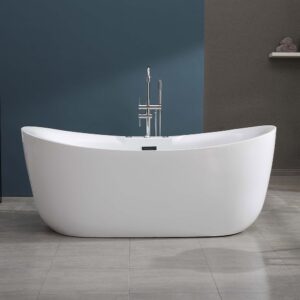
In practice, oval forms often work well because they soften hard architectural lines without appearing heavy. A freestanding bathtub with a balanced profile can therefore support both comfort and design discipline. That is one reason oval freestanding models remain relevant even as bathroom trends continue to move toward wellness, minimalism, and hotel-inspired layouts.
Evaluate space before discussing style
The real issue is usable space, not room size on paper
A floor plan may appear generous until vanity depth, wall conditions, access clearance, glazing, and plumbing points are considered. Once those factors are added back into the equation, the available footprint for a massage bathtub is often narrower than expected.
This is where many selection mistakes begin. Buyers compare images rather than real installation conditions. The result may be a whirlpool bathtub that photographs well but disrupts movement or weakens the room’s overall balance.
Why mid-range sizing works in many projects
In current market practice, a length around 1700 mm remains one of the most flexible options for a modern bathroom. It gives enough internal space for comfortable bathing while staying manageable across a wide range of layouts. That size often performs well in both private residential projects and specification-driven developments because it supports comfort without placing excessive pressure on circulation.
A strong example is the Water Jetted And Air Bubble Freestanding Heated , which is listed at 1700 x 800 x 720 mm, with a 250 L capacity and a 65 kg weight. That specification explains why this format remains commercially practical. It is large enough to feel substantial, yet not so large that it becomes difficult to place in a typical modern bathroom scheme.
Not every room should use that exact size. Smaller layouts may require a tighter footprint or a different placement strategy. Larger suites may justify a broader model. Still, the principle remains the same: the tub should support movement around it, not compete with it.
Separate massage performance from feature inflation
Water jets and air systems do not create the same experience
One of the most common buying errors is to treat all massage systems as equivalent. They are not. Water jets usually create a more direct, targeted effect. Air systems tend to produce a lighter, more enveloping bathing experience. A dual-function configuration can offer more flexibility, but only when the project actually benefits from that flexibility.
For that reason, a whirlpool bathtub should be selected according to use profile rather than feature count. A stronger hydrotherapy requirement usually justifies a more developed jet system. A project that prioritizes gentle comfort may not need the same configuration.
Practical features are more valuable than decorative excess
Feature lists should be examined with some discipline. A control panel is only useful if operation remains simple. Lighting should improve the bathing environment rather than distract from it. Drainage details matter because service issues tend to emerge there first, not in showroom presentations.
The oval model referenced above is commercially relevant because the specification is not arbitrary. It combines 4 large jets, 6 small water jets, and 10 air bubble jets, supported by a dual water-and-air pump system. It also includes a 7-color underwater LED light, a manual rotary drain with overflow, and a two-button rim control layout. Those details contribute to actual product performance while preserving a clean visual profile.
That balance is important. A massage bathtub that performs well but looks overly technical may not suit a modern bathroom. A visually attractive tub with weak hydrotherapy value is equally problematic. The category only works well when the functional system and the design language support each other.
Material should not be treated as a secondary issue
Acrylic remains commercially relevant for good reasons
Material affects installation, shaping flexibility, maintenance, structural design, and long-term practicality. Acrylic continues to hold a strong position in the category because it supports contemporary forms, relatively manageable handling, and a surface language that fits current bathroom design directions.
That advantage becomes more visible in freestanding bathtub development, where profile control and surface clarity matter. A cleaner silhouette is easier to achieve when the material supports it properly. In many B2B settings, that translates into broader design compatibility and fewer compromises between appearance and manufacturability.
Internal quality matters more in a Massage Bathtub
Once pumps, plumbing, jets, overflow components, and controls are introduced, the product moves beyond simple shell design. At that point, internal build quality becomes part of the buying decision. Reinforcement, sealing, drainage reliability, and leakage control are no longer secondary technical details. They are central to long-term product performance.
This is where buyers should be cautious. A polished showroom appearance does not guarantee system stability. For a whirlpool bathtub, manufacturing discipline matters as much as visible finish. That is particularly relevant in project work, where post-installation corrections are expensive and disruptive.
Think in project terms, not only in product terms
Standard models are not always enough
For many commercial buyers, the selection process does not end with a standard product specification. Projects may require adjustments to size, finish, appearance details, or model compatibility with a larger design program. That is common in hospitality, villa, premium residential, and multi-unit work.
In those situations, a freestanding bathtub is not being chosen only as a standalone object. It becomes part of a broader room strategy. Proportion, visual hierarchy, and installation logic all matter.
Service still affects the final decision
This is where the supplier’s structure becomes relevant, although it should be treated as a practical issue rather than a marketing claim. Gurgle has been focused on acrylic bathtub manufacturing since 2005, and its product and company information point to customization support, factory production capability, and project coordination across design, manufacturing, and shipping stages. For buyers, that matters because a well-specified massage bathtub still depends on consistent execution after approval. A good product is one part of the decision. Reliable delivery, specification clarity, and service response are the rest.
That point becomes more important, not less, as bathroom projects move toward more individualized solutions. In 2026, personalization is not limited to color and styling. It often includes fit, system choice, and alignment with broader wellness and design objectives.
A more reliable selection method for 2026
A practical selection path is available if the process remains disciplined. First, define whether the project primarily needs hydrotherapy, visual impact, or a balanced solution. Second, confirm that the layout can support the size and clearance of the chosen tub. Third, assess the massage system in terms of real user benefit rather than surface complexity. Fourth, review material and internal build quality with the seriousness appropriate to a system-based bathing product. Fifth, consider whether the supplier can support customization, scheduling, and after-sales follow-through.
When those steps are taken in order, the distinction between massage bathtub, whirlpool bathtub, and freestanding bathtub becomes clearer. Selection becomes less subjective. It also becomes more defensible from a commercial standpoint.
Conclusion
The right massage bathtub for a modern bathroom in 2026 is not defined by trend language alone. It is defined by fit: fit with the room, fit with the user profile, fit with project execution, and fit with the expected level of product performance. A whirlpool bathtub can add meaningful hydrotherapy value when that function is genuinely needed. A freestanding bathtub can strengthen the design direction of the room when proportion and placement are handled properly. The strongest outcomes are achieved when those two values are not separated.
For buyers reviewing options, the most effective approach is to assess the tub as part of the total bathroom system. Size, massage configuration, material, build quality, and service support should be reviewed together. That is the safest way to reduce risk and improve long-term project value. For project-specific guidance, contact us.
FAQ
Q: Is a massage bathtub always the best choice for a modern bathroom?
A: No. It is the better choice when the bathroom is expected to support regular hydrotherapy or comfort-focused use. If the main objective is spatial simplicity with limited feature demand, a simpler freestanding bathtub may be more suitable.
Q: Why is a 1700 mm tub often considered a practical option?
A: It usually offers a strong balance between user comfort and layout efficiency. In many modern bathroom projects, that size provides adequate bathing space without making circulation more difficult.
Q: What should buyers review besides appearance and jet count?
A: Material, reinforcement, plumbing quality, drainage detail, leakage control, customization capacity, and after-sales support all affect long-term performance. These factors are especially important in any whirlpool bathtub or massage bathtub project.


