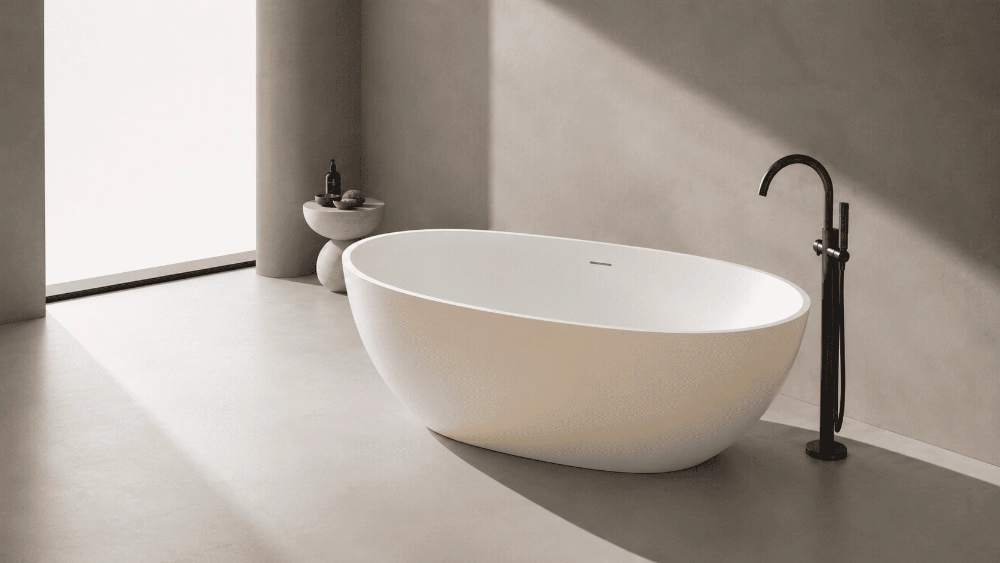
Not necessarily. Artificial stone, stone resin, and solid surface can describe related cast-composite materials, but the names alone do not prove that two bathtubs use the same formula, surface construction, or quality standard. Two products can look almost identical while using different mineral fillers, resin systems, pigments, coatings, or repair methods.
For an artificial stone bathtub, the material name should be the beginning of the comparison, not the final specification. The useful questions are more concrete: what is the body made from, how is the visible surface formed, what sample controls the finish, and what acceptance criteria apply to the ordered model? Those details make artificial stone vs stone resin comparisons far more meaningful than the label alone.
Artificial Stone vs Stone Resin vs Solid Surface at a Glance
The table below gives a practical way to read the terminology before moving into model-specific details.
| Term | What It Usually Describes | What Still Needs Confirmation |
| Artificial stone | A broad cast-composite bathtub category using mineral filler with a resin or binder system. | Exact filler and binder, surface construction, finish, repair method, and model-specific documents. |
| Stone resin | A mineral-filled resin composite; the term is usually more composition-focused than “stone bathtub.” | Mineral type, resin chemistry, pigment method, coating or through-body finish, curing process, and care limits. |
| Solid surface | A recognized surfacing-material category commonly associated with a homogeneous, renewable surface. | Whether the molded bathtub uses the same material system, plus finished-product evidence and repair guidance for the selected model. |
Treat the Material Name as a Starting Point
The three terms overlap in everyday sales language, yet they are not automatic synonyms. “Artificial stone” is a broad commercial description. “Stone resin” usually points more directly to a mineral-filled resin composite. “Solid surface” is a recognized surfacing-material category, but its material definition and test scope should not be assumed to cover every molded bathtub sold with that wording.
That distinction matters for both homeowners and procurement teams. If a quotation says only “stone bathtub,” the buyer still does not know whether the unit is natural stone, a cast composite, a coated construction, or another material sold under a stone-related name. A clearer comparison moves from the sales term to the material declaration, finished surface, care limits, and approved sample.
Why the Terms Overlap in Bathtub Specifications
Bathtub terminology is not used consistently across every supplier, market, or product catalog. A smooth, low-gloss cast tub may be described as artificial stone, stone resin, or solid surface depending on the material system and the terminology used by the seller. Similar photographs do not confirm the same binder, filler grade, pigment, or surface layer.
Shape adds another complication. A freestanding bathtub is a finished molded product, not a flat sheet. Terms that are meaningful for sheet surfacing can help describe composition or appearance, but they should not be treated as proof of finished-bathtub performance. The useful record follows the product from raw material through casting and finishing, then connects that description to a sample that can be approved.
What Each Term Usually Describes
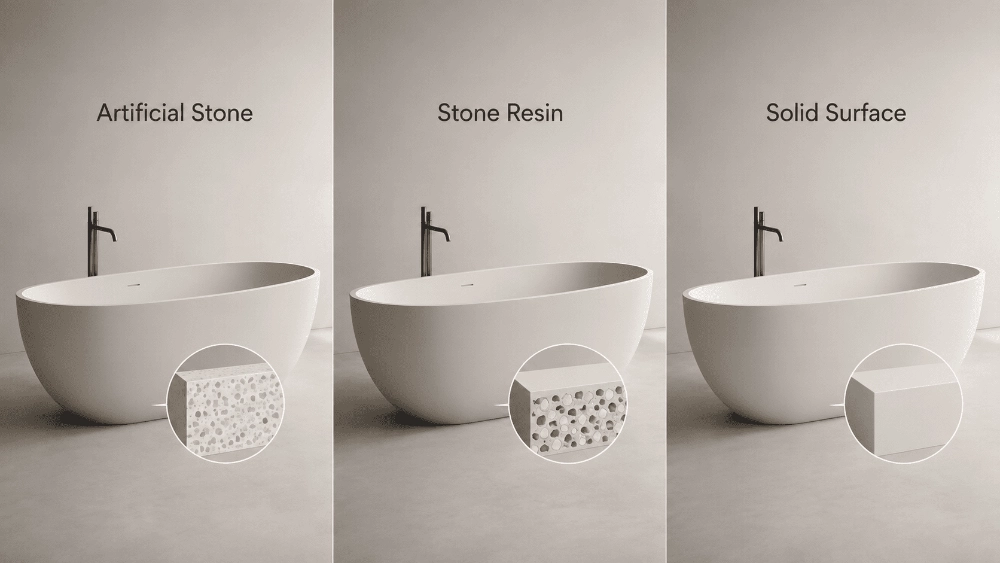
Each term becomes more useful when it is tied to the question it can answer. None should stand alone as a complete material definition.
Artificial Stone Bathtub
This category is generally a cast composite made with mineral filler, resin or another binder system, pigments, and finishing materials. The name separates it from a bathtub carved from natural stone, but it does not disclose one fixed filler-to-resin ratio. Composition can vary by model, color, surface effect, and manufacturing method.
For purchasing purposes, confirm whether the visible surface is part of the cast body or a separate coating. The material record should identify the binder family, filler description, pigment method, approved finish, and any model-specific test information available.
Stone Resin Bathtub
A stone resin bathtub usually indicates a cast material that combines mineral content with resin. This is more specific than the broad phrase “stone bathtub,” but it still leaves important variables open. Mineral type, particle distribution, resin chemistry, pigment, surface treatment, and curing can all change the final result.
The stone resin material statement should identify the selected model and finish. When comparing an artificial stone vs stone resin bathtub quotation, do not assume similar names mean similar composition or repair behavior. The quotation, material sheet, color sample, and production item should point to the same product reference.
Solid Surface Bathtub
Solid surface is a recognized surfacing-material category rather than a universal bathtub recipe. ISFA solid-surface standards describe sheet materials made from reacted monomers or resins, mineral fillers, and pigments, while allowing composition to vary by type and intended use. A solid surface bathtub may use a related material concept, but the name alone does not establish the exact formula of the molded product.
The scope boundary matters. Shaped-goods performance and testing sit outside the sheet standard, so a sheet-material definition alone does not prove how a molded bathtub performs. For a molded tub, request material information and evidence that apply to the selected shape, finish, and destination-market requirements.
Put the Material Questions in the RFQ
A useful artificial stone bathtub material specification does not need to reveal proprietary manufacturing know-how. It does need enough detail to identify what is being purchased and how the finished product will be checked.
Mineral Filler and Resin System
Request a plain material description: the type of mineral filler, the resin or binder family, and whether the supplier declares a composition range for the selected model. Do not copy a percentage from another series into the order. If exact proportions are commercially confidential, a controlled material designation and a data sheet tied to the item code are still useful.
Also ask how casting, curing, sanding, and polishing relate to the stated finish. Those steps help explain how the surface is produced, but they do not establish a specific performance result on their own. Claims about heat, chemicals, impact, staining, or color stability should be tied to relevant evidence and a stated test method.
Surface Structure, Pigment, and Color
The RFQ should distinguish a through-body appearance from a coating, gel coat, paint layer, or another applied finish. This can affect how color variation, chips, scratches, and later repairs are assessed. It also determines which sample is useful: a small color chip may show shade and gloss, while a molded sample can reveal texture, edge treatment, and surface depth.
Color language should be specific enough for approval. “White” or “matte” alone leaves room for disagreement. Record the approved sample code, gloss level if available, acceptable visual range, inspection lighting, and whether limited batch variation is expected.
Repair Method and Product Boundaries
Repairability should be confirmed for the actual material and surface structure. Sanding may suit some homogeneous surfaces, while a coated finish may need another repair system. Ask for the approved repair method, repair-kit contents if offered, technician requirements, and the visual limit of an acceptable repair.
The same rule applies to cleaning and chemical exposure. Care guidance for one composite should not automatically be transferred to another. Compatible cleaners, maintenance instructions, and any resistance claims should match the ordered bathtub and finish.
Samples and Acceptance Criteria Prevent Costly Disputes
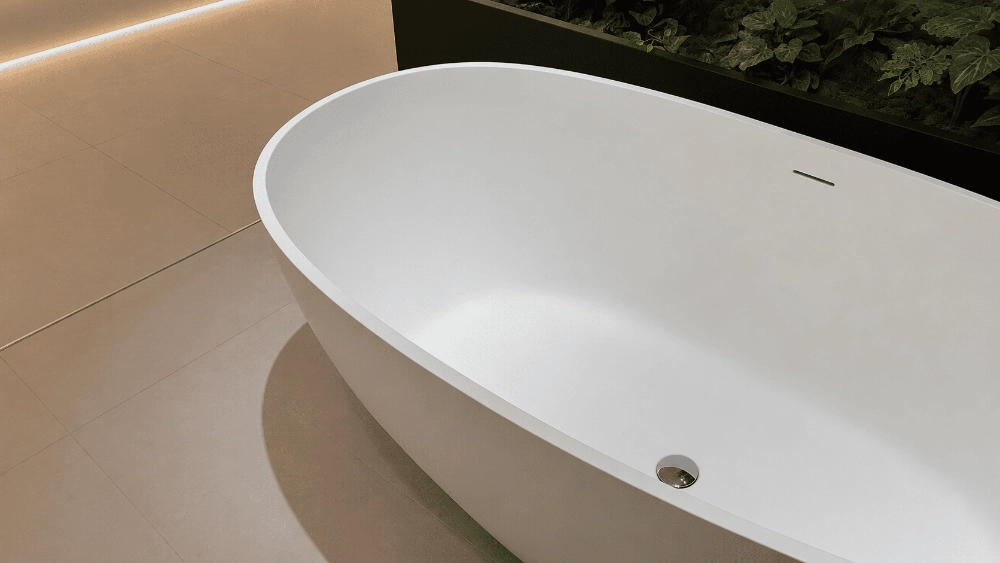
A signed sample is more useful than a polished catalog image. Before bulk production, identify which sample controls color, texture, gloss, edge finish, and visible surface quality. Record the date, model, finish code, and clear photographs.
Acceptance criteria should explain how production units will be compared with that sample. Useful checks include color consistency under agreed viewing conditions, surface uniformity, pinholes, sanding marks, repaired areas, edge quality, and finish contamination.
For larger orders, a pre-production sample and a first-off production check can catch a mismatch before the full batch is completed. If repair is acceptable, approve a repair sample as well. This turns a vague claim that the surface is repairable into a visible standard for the purchasing team and factory inspectors.
How Gurgle Categories Support Material Comparison
After the material questions are defined, supplier categories can help narrow the product set. Gurgle separates its artificial stone bathtub range from the resin bathtub category. That separation is useful for inquiry routing, but the selected model still needs its own material declaration, finish sample, care guidance, and acceptance record.
Use the same questions for every shortlisted supplier: exact product code, material name, binder and filler description, surface construction, available colors, repair approach, care limits, and applicable documents. Comparable answers make it easier to judge how to choose an artificial stone bathtub for a project without relying on a sales label alone.
Conclusion: Confirm the Material Before the Order Moves Forward
Artificial stone, stone resin, and solid surface can describe related products, but they do not guarantee the same formulation or finished performance. A sound specification connects the commercial name to a model-specific material sheet, surface description, approved sample, repair boundary, care guidance, and acceptance criteria.
The final decision should rest on documents and samples that match the ordered artificial stone bathtub or related model. For project-specific questions about material wording, finish samples, product categories, or order documentation, contact the Gurgle team before approving the specification.
FAQs
Q1: Is stone resin made from natural stone?
A1: Usually not as a single carved piece. The term commonly refers to a cast composite containing mineral filler and resin. Because the mineral and binder system can vary, the selected model’s material information should define the composition more clearly.
Q2: Does solid surface use the same formula from every supplier?
A2: No. Solid-surface compositions can vary, and a sheet-material standard does not automatically establish the performance of a molded bathtub. Request model-specific material information, relevant finished-product evidence, and a representative sample for approval.
Q3: What sample should buyers approve before a bulk order?
A3: Approve a sample that represents the ordered model or its actual surface system. Record color, texture, gloss, edge finish, surface quality, model code, and date. If repairs may be accepted, a separate approved repair sample helps define the visual limit.