
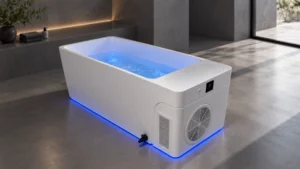
For most homes, an all-in-one cold plunge is the simpler starting point when ventilation and service space are adequate. Tub and cooling equipment are coordinated, with fewer external water connections. A separate chiller gives more flexibility over equipment placement and replacement, but adds hoses and fittings to check. Neither design is automatically easier everywhere. Compare total space, heat and noise, cleaning access, and how easily parts can be reached later.
| Home-use factor | All-in-one cold plunge | Separate chiller |
| Initial setup | Fewer external water connections | Hoses and fittings connect two units |
| Total footprint | Tub and chiller occupy one location | Tub and chiller need separate places |
| Heat and noise | Released near the bathing area | Equipment position can be more flexible |
| Maintenance | Depends on access within the enclosure | Chiller can be checked as a separate unit |
| Future replacement | Integrated equipment access matters | Separate cooling equipment may be easier to replace |
Start With the Room, Not the Product Label
A garage, covered patio, or spare room may suit either layout. An integrated unit keeps tub and cooling equipment together; a split system needs separate room for the chiller, hose bends, and service access. Compare the full installation footprint, not only the bathing shell.
Map the full footprint
Measure doorways, tight corners, stairs, and the space needed to turn the tub into position. Check the packaged dimensions as well as the installed footprint. Height matters if a cover or access panel needs to lift. A unit that fits the floor plan may still be difficult to bring indoors, particularly when it must pass through a narrow hallway.
Leave a practical service side
Leave enough space to reach filters, drains, control panels, and the water connections without moving the whole setup. The exact clearance is model-specific. For example, Gurgle’s acrylic all-in-one cold plunge calls for 12 inches on the drainage side and at least 39.5 inches on the air-vent side. These are requirements for that product, not universal figures for every cold plunge. A split system needs access at both the tub and the separate chiller.
How the Two Layouts Handle Heat and Airflow
A cold plunge chiller removes heat from water and releases it into surrounding air. Without ventilation, cooling can suffer. An all-in-one unit releases heat close to the tub. A separate chiller may sit farther away, provided its approved hose length, pump performance, weather protection, and electrical requirements allow that arrangement.
Integrated heat rejection
The shorter external water path is a practical advantage of an integrated setup. There are fewer exposed connections to arrange and check. The trade-off is that warm exhaust air, compressor noise, and maintenance access all have to be accommodated at the tub’s location. Do not enclose the unit in a cabinet or narrow alcove unless its installation instructions specifically permit it.
Separate equipment placement
A separate chiller can be easier to reach or position away from the bathing area. That flexibility is limited by hose length, bends, elevation changes, insulation, and the pump’s operating requirements. Gurgle’s cold plunge tub with a separate 1HP chiller is one relevant configuration; its acrylic tub is offered in sizes including 1700 × 800 × 600 mm. Check the instructions for the chosen setup before fixing the chiller location or pipe route.
Connections, Power, and Drainage
The clearest installation difference is the plumbing. An integrated plunge generally needs fewer external connections. A split setup joins the tub and chiller with inlet and return hoses; additional valves or fittings depend on the model. Keep connections accessible for leak checks instead of enclosing them permanently behind finished surfaces.
Electrical route and isolation
Confirm voltage, plug or hardwiring requirements, and any dedicated circuit before installation. Near water, suitable GFCI protection reduces electrical shock risk. A qualified electrician should check local requirements and locate the power supply safely. Keep connectors and equipment away from standing water as the manufacturer directs.
Fill, drainage, and wet-zone access
Plan how the tub will be filled and emptied before deciding where it belongs. Confirm the drain outlet, the route for wastewater, and how splashes will be managed during cleaning. In a garage or on a patio, also check floor slope, weather protection, and freezing conditions. For a split setup, follow the model instructions for draining both the tub and chiller; water left in exposed hoses or equipment can create problems in cold weather.
Keep the fill point, drain route, shut-off instructions, and filter location in a short note with the owner’s manual. It makes the next cleaning or service visit easier, especially if someone else in the household has to deal with a fault.
Noise, Cleaning, and Routine Service
A separate chiller may allow compressor noise to be positioned farther from a bedroom or lounge. An all-in-one unit keeps the equipment close to the tub, but the actual sound depends on its pump, compressor, operating conditions, and installation surface. Neither option is automatically quieter. Ask for model-specific sound information rather than assuming that fewer hoses mean less noise.
Equipment reach
Filters, drains, circulation points, and any ozone parts need access. Gurgle offers configurations with filtration, ozone treatment, and digital controls; features vary by model. Check how filters are removed, how the system drains, and what maintenance can be done without shifting the bath.
Service routine
At home, cleaning must be manageable: wipe the waterline, check filtration, watch flow and temperature, and follow the approved water-treatment routine. Check any control-panel alarms and how to isolate equipment before service. On split systems, include hose connections in regular inspections.
What Happens When One Part Fails?
An integrated system may need to stop normal cooling or circulation while a fault is diagnosed, depending on the component involved. With a separate chiller, the tub, hoses, and cooling cabinet are easier to identify as distinct parts, which may help troubleshooting or replacement. That does not mean every split system is simpler to repair. Parts availability, service support, and access around the unit still decide how disruptive a fault becomes.
Before buying either configuration, find out who can service the chiller, whether common filters and seals are available, and what can be replaced without moving the tub. A rental property may also need a straightforward routine that cleaners or maintenance staff can follow. These practical details can matter more over time than the neatness of the first installation.
Which Cold Plunge Setup Is Easier at Home?
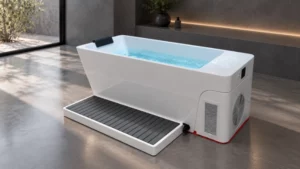
Choose an all-in-one cold plunge when you have enough clear space around the equipment, suitable ventilation, and a preference for fewer external hose connections. Choose a separate chiller when independent equipment placement and easier access to the cooling unit matter more, and the water-line route can be installed within the manufacturer’s limits. Neither is a shortcut around proper electrical protection, drainage, or routine cleaning.
Check the total footprint, not simply the space occupied by the tub. Mark where warm air exits, where the filters and drains can be reached, and how equipment will be moved if servicing is required. Gorgoteo offers both integrated and split cold-plunge configurations, so these checks can be applied to specific products rather than to a broad assumption about either design.
For a real all-in-one reference, the Gurgle acrylic all-in-one cold plunge measures 1950 × 800 × 710 mm and includes a built-in 1.0HP chiller. Its stated 380–460 L capacity also makes filling, drainage, and overall floor loading worth checking. The dimensions and required ventilation clearances belong to this model; a different integrated tub may need a different installation plan.
For other shapes and footprints, the ice bath tub collection is a useful next comparison. Check each model’s cooling layout and service requirements before narrowing the shortlist.
What to Check Before Buying
Before ordering, confirm the complete dimensions, room access, ventilation clearance, electrical supply, drain position, filter access, hose limits, and the path for future servicing. For a split system, ask how the connections are secured and where the chiller can safely sit. For an all-in-one unit, check which side needs open airflow and whether filters and drains remain accessible in the chosen location.
For help matching a specific cold plunge configuration to a home layout, Contacta con el equipo de Gurgle with room dimensions, a preferred tub position, and any access or drainage constraints.
Conclusión
An all-in-one cold plunge is often the easier home setup when it has sufficient ventilation and service space. A separate chiller offers more freedom over equipment location and future replacement, with extra connection work in return. Compare actual model drawings and installation instructions, then choose the arrangement that fits the room and the maintenance routine you can realistically keep up.
Preguntas frecuentes
Q1: Is an all-in-one cold plunge always easier to install?
A1: No. It normally reduces the external connection work, but the tub still needs ventilation, drainage, electrical protection, and access to service points. Where equipment clearance is tight, a separate chiller may be easier to position and maintain.
Q2: Can a separate chiller be placed in another room?
A2: Sometimes. First check whether the model permits the planned hose length, elevation change, water flow, and chiller location. The route also needs suitable airflow, weather protection where relevant, and a safe electrical supply. Do not extend hoses beyond the approved installation limits.
Q3: What should be compared before choosing a home cold plunge?
A3: Compare total space, exhaust airflow, the number of hose connections, noise at the bathing position, access to filters, drainage, electrical requirements, and replacement options. The right choice is the one that fits the actual room and can be cleaned and serviced without unnecessary work.


