
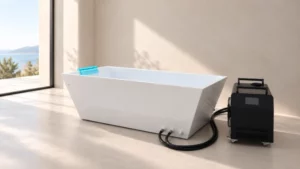
An ice bath tub is easier to manage when cleaning becomes part of the routine rather than a rescue job after cloudy water appears. Oils, leaves, fibers, and other debris should be removed before they enter the circulation path. For anyone working out how to keep ice bath water clean, the basic pattern is simple: clean the surfaces, protect water flow, maintain filtration, and change the water when its condition or the equipment calls for it. Light home use may need only a few minutes after each session, while a hotel, gym, or recovery facility needs an ice bath maintenance routine that staff can repeat and record.
Start With the Tub Surface and the Water Line
A clear water surface does not mean the vessel itself is clean. Sweat, sunscreen, hair, and textile fibers gather at the water line and on the spots people touch most. Left in place, residue can travel through circulation and become harder to remove. Once a user steps out, remove visible debris, wipe the waterline, and look at the drain and inlet before replacing the cover.
Choose a soft cloth or non-abrasive sponge and a cleaner approved for the tub material. Strong bleach-based cleaners and corrosive disinfectants should be avoided unless the selected model specifically allows them. The cleaning method needs to suit the vessel, liner, seals, and nearby fittings. Rough brushes, abrasive pads, and unapproved solvents can scratch the surface and give dirt places to settle.
A cover reduces exposure, but it cannot replace a wipe-down. Dust and pollen enter outdoor units; indoor units pick up lint and skin products. Checking beneath the cover takes little time and often catches a small issue before it becomes a larger cleaning job. This surface step is the simplest part of how to clean an ice bath tub between uses.
Use Filtration as Part of the Cleaning Routine
Filtration takes suspended particles out of the water, yet it does not clean the surface or replace a suitable treatment plan. When a cartridge fills with debris, flow can fall and pump effort can rise. Water may look dull even though the chiller still reaches its set temperature. A useful cold plunge maintenance routine treats the vessel and the equipment as two connected jobs.
Check the cartridge before flow drops too far
Set filter checks around actual use, incoming water quality, and the debris reaching the tub. One private user usually creates a different load from a facility with many sessions each day. Removal, rinsing, and replacement should follow the selected model’s instructions. If a cartridge stays dirty after rinsing or low flow keeps returning, replacement is the sensible next check; adding more treatment chemical is not a substitute.
For the Gurgle GD-IC chiller, the maintenance guidance gives about two months as a normal paper-filter replacement reference and recommends checking and cleaning the inner strainer every four weeks. These are model-specific starting points, not universal schedules. Heavy use, visible debris, or recurring low flow can justify earlier attention.
Inspect the inlet, outlet, and inner strainer
The main cartridge is only one possible restriction. Hair, fibers, leaves, and mineral deposits can narrow an inlet screen, inner strainer, hose, or fitting. Isolate the equipment before opening a housing or cleaning a strainer. Slow return flow, odd pump noise, air in the line, or a rising water temperature signals that the water path needs attention. It does not, by itself, show that a stronger chiller is required.
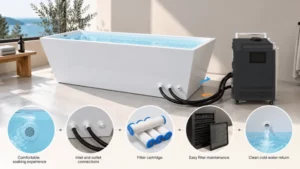
How Ozone and Water Treatment Fit In
Some systems combine circulation, filtration, and ozone, but those functions do different work. The filter catches particles. Circulation carries water through the treatment path and around the vessel. Ozone can assist oxidation when the system is designed for it. None of these functions removes residue from a cover, waterline, drain, or filter cartridge.
Treatment choices depend on the equipment, local requirements, and the way the tub is used. A busy shared site may need documented testing, approved disinfectants, staff training, and a response plan for cloudy water or suspected contamination. A home setup still needs clear limits. Persistent odor, film, unusual color, or recurring clarity trouble is a reason to drain and clean rather than experiment with an unverified dose.
The word “sanitizing” should be used carefully. A feature description is not the same as a validated public-health treatment claim. Use the operating instructions for the selected model, including its treatment cycle, filter specification, cleaning method, and chemical limits.
When Should Cold Plunge Water Be Changed?
There is no single answer to how often to change cold plunge water. Bather load, pre-use showers, water temperature, cover habits, filtration time, treatment method, and incoming water all affect the interval. A lightly used private tub may stay clear longer than one used throughout a busy day. Oily or cloudy water, foam, visible particles, a blocked filter, or repeated low flow all justify changing it sooner.
A short log of fills, sessions, filter checks, water changes, and treatment adjustments gives a better guide than a generic calendar. Over time, it can show whether trouble follows user load, an uncovered tub, blocked filtration, or a problem somewhere in the water path.
Before draining, switch the equipment off and follow the selected model’s drainage instructions. Some systems also need residual water cleared from the chiller and connected hoses when freezing conditions are possible. Water trapped in a machine can freeze, block a line, or damage components. Drainage protects hygiene and the equipment at the same time.
A Practical Between-Use Sequence
A simple between-use sequence keeps responsibilities clear at home and in shared facilities:
- Inspect the water surface, waterline, drain, and visible fittings.
- Lift out leaves, hair, and other large debris with a net or disposable tool.
- Wipe contact surfaces with an approved cleaner and a soft cloth.
- Check the filter housing, inlet screen, and return flow for obvious restrictions.
- Make sure the cover is clean and dry before closing it.
- Record unusual odor, foam, cloudiness, low flow, or a damaged seal.
For a shared tub, a shower or rinse policy can reduce the load entering the water. Hotels, gyms, and therapy settings also benefit from keeping a cleaning log near the equipment and defining the point at which use must stop.

What Maintenance Features Make an Ice Bath Easier to Keep Clean?
Maintenance begins with the configuration. Different ice bath tub designs can place the filter, drain, circulation components, and service points in very different locations. Before choosing a model, check whether routine parts are easy to reach without moving the tub or opening fixed cabinetry. Two tubs that look similar can use different water paths, so the care routine should always follow the exact configuration.
Ask for the approved cleaner and treatment limits, filter type, replacement steps, drainage instructions, and the response to low flow. If ozone is included, confirm how it is controlled and what cleaning tasks it does not replace. Easy access matters as much as the feature list: a filter or drain that is difficult to reach makes regular care less likely.
Available configurations from Gurgle may include filtration, paper cartridges, fine-mesh pre-filtration, and ozone options. These features can support easier routine care only when the filter, circulation path, and drain remain easy to inspect and maintain.
For example, a cold plunge tub with a 1HP chiller combines the tub and cooling system in one configuration, so its filter access, inlet and outlet path, drainage points, and maintenance instructions should be reviewed as a complete system.
Where the Routine Changes by Use Type
A private home normally has a smaller debris load than a gym, recovery studio, hotel, or resort. Home users can focus on after-use wiping, cover discipline, visible water condition, and scheduled filter checks. Shared facilities need written responsibility, a turnover check, and a clear rule for isolating the tub when water or equipment condition is not acceptable.
Access still matters in both settings. A filter cup hidden behind fixed cabinetry turns a quick inspection into a service task, while a drain without a workable discharge route makes water changes harder. A damaged or awkward cover also invites more debris and lets chilled water warm faster.
Conclusion
Keeping an ice bath tub clean between uses comes down to repeatable work: remove debris, wipe the waterline, maintain filtration, watch return flow, record changes, and drain when water or equipment condition calls for it. Ozone may support a treatment system, but it does not replace a clean vessel or a working filter. The right routine matches the tub, water path, user load, site temperature, and service access. For model-specific questions about filtration, drainage, replacement filters, or care instructions, contact the Gurgle team before putting the system into regular use.
FAQs
Q1: How often should an ice bath tub be cleaned?
A1: Wipe the waterline and contact areas after use, then inspect the filter and visible water condition on a schedule that reflects user load. Full draining and cleaning should follow the model instructions and the actual water condition rather than an unsupported universal interval.
Q2: How often should cold plunge water be changed?
A2: There is no fixed change interval for every cold plunge. Usage, cover discipline, filtration, treatment, water temperature, and incoming water quality all matter. Change the water when clarity, odor, foam, film, or repeated filter and flow trouble shows that the current routine is no longer controlling the condition.
Q3: Can ozone replace filtration and cleaning in an ice bath?
A3: No. Ozone may support treatment in a system designed for it, but it does not remove debris, clean the waterline, or replace a cartridge and strainer check. Follow the selected model’s instructions and keep the surface, filter, and drain routine in place.


