
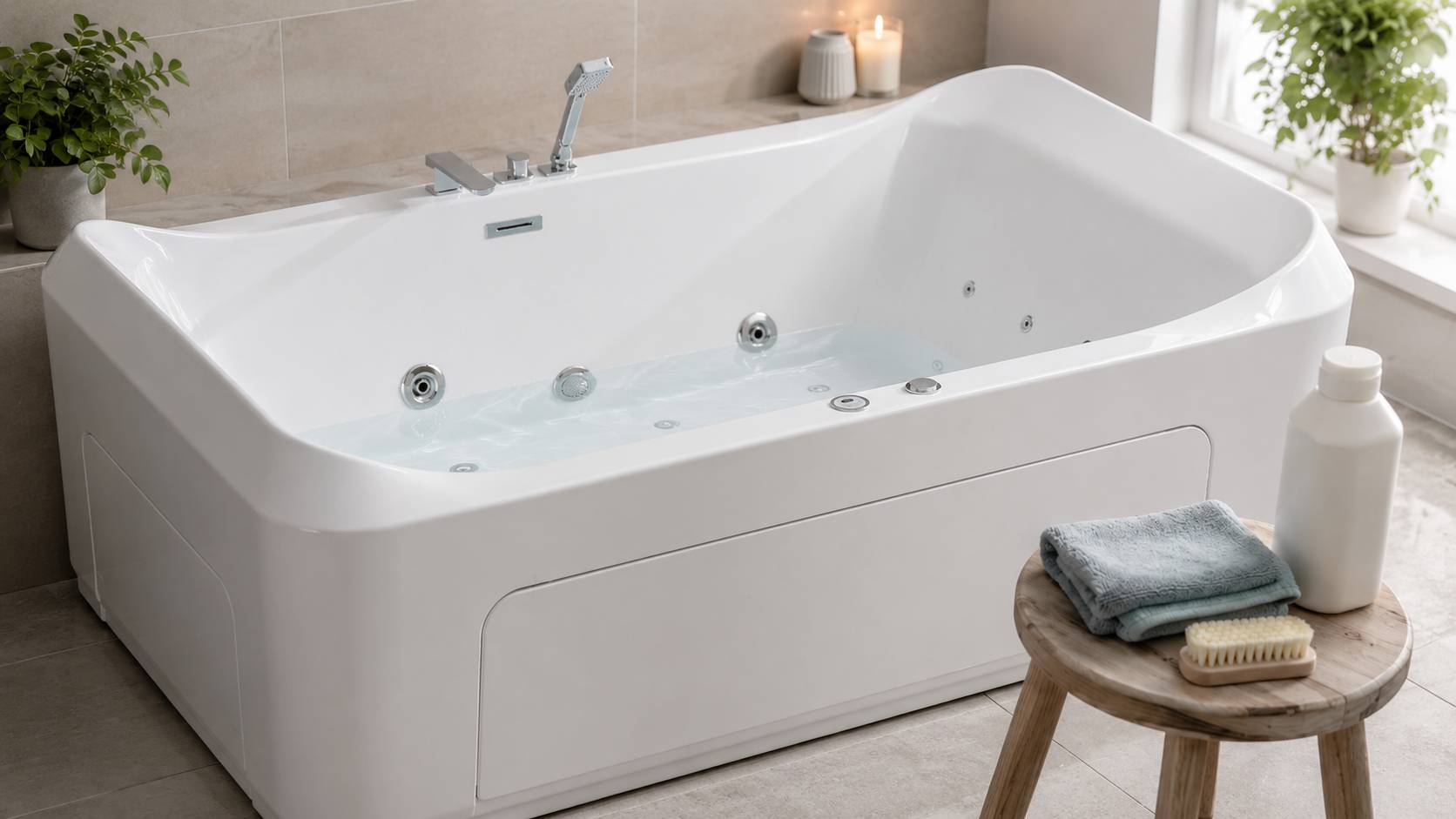
A whirlpool bathtub needs more than a quick wipe. The visible acrylic shell collects soap film, body oils, water spots, and residue around the drain. Water also remains inside jet fittings, pump connections, and circulation pipes that a cloth cannot reach. A tub may therefore look clean while deposits build inside the massage system.
The safest method treats these areas separately. The shell needs soft tools and a mild product that will not dull or scratch acrylic. The jets need a controlled cleaning and rinsing cycle. This guide explains how to clean a whirlpool bathtub, how to clean whirlpool bathtub jets, and when a flow or pump problem requires inspection rather than more cleaner.
Why Do the Acrylic Shell and Jets Need Different Cleaning Methods?
Visible surfaces and the water system collect different residue, so they require separate methods.
The Acrylic Surface Needs Gentle Contact
Acrylic supports curved shapes and a smooth finish, but dry grit, abrasive powder, rough pads, and sharp tools can leave fine scratches. Remove loose particles first, then use a microfiber cloth, non-abrasive sponge, warm water, and mild detergent. Soften stubborn marks through repeated gentle cleaning rather than scraping.
The Jets Carry Water Through Hidden Areas
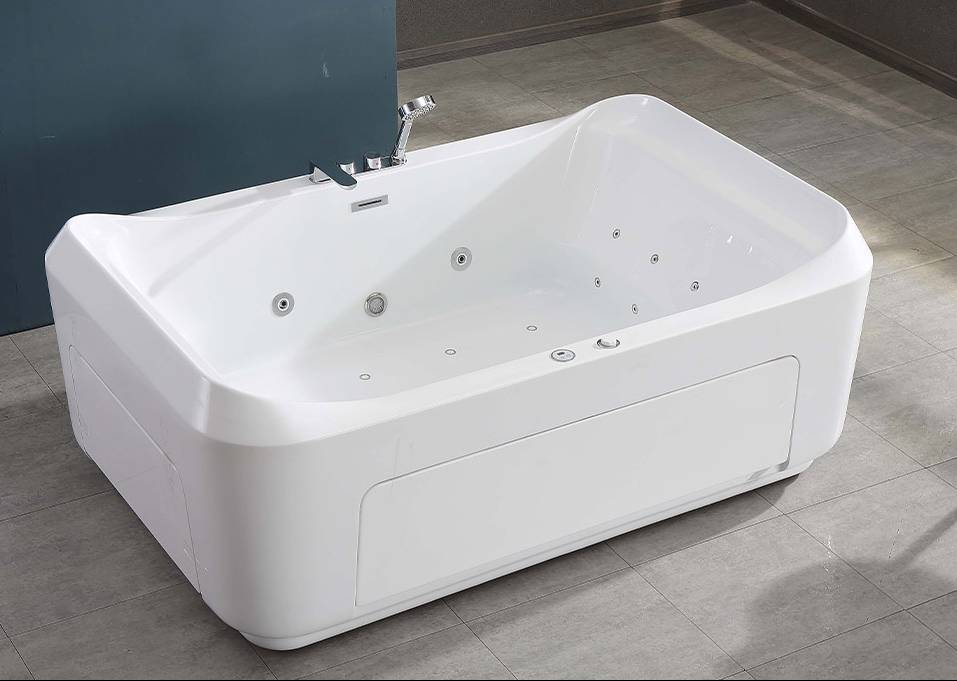
Water jets draw water through an intake, move it through a pump, and return it through the nozzles. Soap, body oils, hair, and mineral residue may enter this route. Air jets push air through separate channels. Combination tubs may use both systems, so cleaning whirlpool bathtub jets should match the actual configuration.
Buyers comparing models can review the whirlpool bathtub range to see how jet layouts and massage systems vary. The cleaning method should suit the selected system.
What Should Be Checked Before Cleaning Starts?
Preparation protects the shell and prevents incorrect pump operation or concentrated cleaner remaining in the pipes.
Identify the Jet Functions and Service Points
Confirm whether the bathtub has water jets, air jets, or both. Locate the intake, nozzles, drain, overflow, controls, and service panel. Check whether the nozzles may be rotated or removed. Do not assume that a removable-looking fitting is intended for routine disassembly.
A water-jet circuit usually needs a filled-tub circulation cycle, while an air system may require a purge or dry-out cycle after drainage. Handle independently controlled functions in the correct order.
Prepare Acrylic-Safe Tools and Products
Use microfiber cloths, a non-abrasive sponge, a soft nylon brush, clean towels, gloves, and a manufacturer-approved whirlpool bathtub cleaner. Mild liquid detergent may suit the shell, while the internal circuit may need a specialized product. Never combine cleaners or increase concentration to accelerate the process. Highly corrosive products, especially those containing acetone or formaldehyde, are unsuitable for acrylic.
How Should the Acrylic Shell and Visible Fittings Be Cleaned?
Clean the shell before circulating the massage system. This prevents loose hair and debris from being drawn into the intake when the jets start.
Rinse, Wipe, and Dry the Shell
Rinse the waterline, seat contours, drain, overflow, nozzle faces, and intake with clean water. This removes particles that might act like grit beneath a cloth.
Apply mild detergent to a damp cloth or sponge rather than pouring a concentrated product onto a dry surface. Wipe in sections and rinse before the cleaner dries. Use a soft brush around nozzle edges and trim rings, but do not insert metal tools into openings.
If the maintenance instructions allow nozzle removal, visible hair or debris may be cleared. Stop if a fitting resists movement. Rinse thoroughly and dry with a clean towel. This is the surface stage in how to clean a whirlpool bathtub without damaging acrylic.
How to Clean Whirlpool Bathtub Jets and Internal Pipes
After the shell is clean, circulate an approved solution through the massage route, then remove it with clean-water rinsing.
Fill and Circulate the Cleaning Solution
Close the drain and fill to the specified operating level. Keep the intake and relevant nozzles submerged; insufficient water can interrupt circulation and stress the pump.
Add the recommended amount of whirlpool bathtub cleaner. Start the water jets and circulate the solution for the period stated in the cleaner or bathtub instructions. Watch the flow from each nozzle. Uneven output may indicate trapped debris, a restricted nozzle, or a service issue that cleaning alone cannot resolve.
Drain, Rinse, and Dry the System
Stop the massage function before draining. Cloudy water, flakes, hair, or odor may come from soap residue, body oils, scale, or pipe debris.
Refill the bathtub with clean water and run a rinse cycle through the water jets. Drain again and repeat if foam or residue remains. Do not add more chemical product when the main need is to remove the first solution.
For air-jet models, run the specified purge or drying function after drainage. Dry the shell and fittings. A complete rinse is essential when cleaning whirlpool bathtub jets because cleaner left in the circuit may return during the next use.
Which Cleaning Mistakes Can Damage the Tub or System?
Most avoidable damage comes from excessive force, unsuitable chemicals, or operating the system outside normal conditions.
Avoid Abrasive Products and Strong Solvents
Cleaning powders, rough pads, stiff brushes, and abrasive blocks may dull or scratch the finish. Strong solvents and corrosive chemicals may affect seals or plastic fittings. A suitable whirlpool bathtub cleaner should work without an aggressive concentration.
Bath oils, salts, and high-foam products also need careful use. Their suitability depends on the jet design and bathtub instructions. Excess foam can make circulation difficult to control, while oily residue may require more frequent internal cleaning.
Do Not Run Low Water or Force Parts
Never run water jets when the intake is exposed or the water level is too low. Do not force nozzles, controls, or access panels. If a pump produces unusual noise, stop the system rather than repeatedly restarting it.
Cleaner may remain in elbows, hoses, and pump connections even after the shell looks clear. A clean-water circulation cycle is part of how to clean whirlpool bathtub jets, not an optional final step.
How Often Should a Whirlpool Bathtub Be Cleaned?
The schedule should reflect usage, water quality, bathing products, and the service environment.
After-Use Care and Periodic Circulation
After use, drain the tub, rinse visible residue, remove hair, and wipe the acrylic. Check nozzle faces and the intake before deposits dry. Schedule deeper circulation cleaning more often when users apply oils, high-foam products, or cosmetics. Hard-water deposits and long periods without use may also justify an earlier cycle.
Hotels, villas, and managed apartments benefit from records of the cleaner, rinse cycles, jet flow, and debris found. Recurring faults then become easier to identify.
For project buyers, Gurgle supplies acrylic bathtubs and massage systems for different bathroom layouts. Cleaning instructions, replacement-part references, and service access should be confirmed for each model rather than generalized across a property.
When Is Cleaning No Longer Enough?
Cleaning removes residue, but it cannot correct every mechanical or installation problem. Knowing when to stop avoids chemical overuse and protects the pump and fittings.
Weak flow after nozzle inspection and rinsing may indicate a blockage, air entry, pump issue, or control fault. Leaks, loose fittings, abnormal pump noise, failed controls, or repeated debris require inspection. Record the model, symptoms, cleaner, completed steps, and supporting photos or videos.
An acrylic whirlpool bathtub needs assessment when scratches become deep, the shell develops cracks, or a repair area changes shape. Polishing may address minor marks, but structural damage requires repair.
Conclusion
Safe maintenance combines gentle acrylic care with controlled circulation through the jet system. Use soft tools, an approved mild product, the correct water level, and at least one clean-water rinse. Never replace rinsing with stronger chemical concentration. A well-maintained acrylic whirlpool bathtub also retains a more consistent surface and jet performance.
For model-specific cleaning guidance, jet configuration checks, or after-sales support, send the product details and maintenance questions to the Gurgle team before dismantling pumps, nozzles, or internal fittings.
For installation planning before maintenance begins, read What to Check Before Installing a Freestanding Whirlpool Bathtub with Jets.
FAQ
Q: How often should whirlpool bathtub jets be cleaned?
A: The interval depends on usage, water quality, bathing products, and system design. Rinse visible surfaces after use. Schedule internal circulation cleaning when the manufacturer recommends it, when flow changes, after extended non-use, or when residue appears from the jets.
Q: Can a regular bathroom cleaner be used on an acrylic whirlpool bathtub?
A: Only when it is non-abrasive, mild, and confirmed as safe for acrylic. Avoid strong solvents, corrosive products, rough powders, and chemicals containing acetone or formaldehyde. Use an approved product for cleaning whirlpool bathtub jets and internal pipes.
Q: Why does debris come out when the whirlpool jets start?
A: Debris may come from soap film, body oils, hair, mineral deposits, or residue inside the circulation pipes. Complete a cleaning and clean-water rinse cycle. If debris returns or jet flow remains weak, inspect the nozzles, intake, pump, and internal plumbing.


