
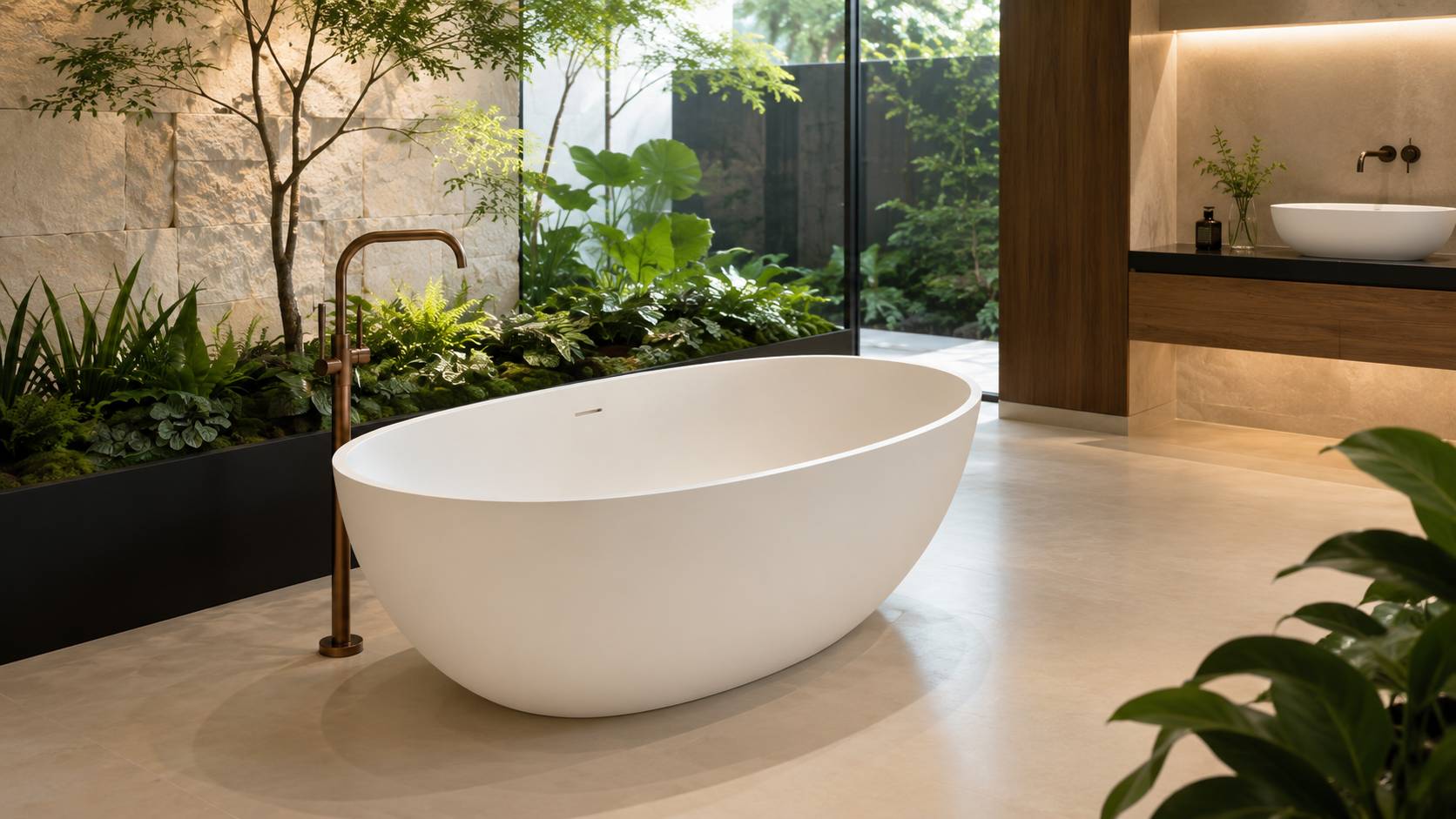
A showroom bathtub may still be unsuitable for a real project. Buyers need to consider interior space, weight, delivery access, floor conditions, drainage, surface care, and production consistency. These points matter wherever design must work with installation and long-term use.
An artificial stone bathtub offers the dense appearance of stone without being carved from one natural block. Yet products described as artificial stone, stone resin, mineral composite, or solid surface may use different formulations and finishes. Selection should therefore begin with construction and project conditions rather than appearance alone.
What Is the Tub Made Of?
Material composition influences weight, touch, strength, color, and repair options. It should be confirmed before shape, finish, or price comparisons begin.
Mineral Fillers and Resin
Cast artificial stone products usually combine mineral fillers with resin. The mineral component creates the solid character, while the resin binds the mixture and allows it to form inside a mold. Gurgle’s artificial stone formulation uses 55% natural mineral filler powder and 45% high-performance resin. This ratio applies to Gurgle’s product system rather than every product sold under the same market terminology.
Buyers should review the formula with finished weight, wall construction, surface treatment, and any decorative layer. Similar commercial names can hide important production differences.
Casting and Surface Finishing
Production starts with mixing and pouring. The filled mold remains in place while the material cures, after which the body is demolded. Sanding, polishing, and surface treatment then create the required matte or textured result.
Finishing should be checked across the full tub. Rim edges, curves, the base, overflow opening, and drain area often reveal inconsistencies.
Material Names Require Clear Specifications
Terms such as stone resin freestanding tub and solid surface freestanding tub are used differently across markets. A quotation should identify the actual composition, surface type, coating if present, and recommended repair method. This creates a reliable basis for sample approval and bulk inspection.
Benefits and Practical Trade-Offs
Once the material is clear, buyers can judge whether it suits the project. Its visual and functional advantages need to be considered alongside handling and cost.
Design Flexibility and Surface Character
Casting supports oval forms, rounded rectangles, high-back profiles, circular tubs, and sculptural designs. Matte surfaces suit restrained modern interiors, while slate or granite-style textures produce a stronger stone effect. Custom colors can coordinate the bath with flooring, wall panels, vanities, and metal finishes.
Design freedom is useful, but the shape must still allow comfortable entry, cleaning access, and practical faucet positioning.
Solid Feel and Heat Retention
The dense body creates a substantial feel and can retain heat well. Actual performance still varies with wall thickness, room temperature, water volume, and construction.
Some matte surfaces can be refinished after light marking. This should be verified before purchase, especially for dark colors, textures, or coated finishes.
Weight, Freight, and Installation Effort
The material is heavier than acrylic, affecting freight, unloading, floor loading, and final positioning. Large models may require more workers or lifting equipment. Renovations with narrow doors or stair turns need careful access checks.
Installation planning must therefore begin before the order is placed.
Which Shape and Size Fit the Bathroom?
A freestanding bath must fit the room and leave enough operating space. Selection should start with measured conditions.
Match the Shape to the Layout
An oval freestanding tub creates a softer outline and works well where the bath is visible from several sides. Rounded rectangular designs suit linear rooms and align more easily with walls or floor patterns. Circular and square forms normally need larger bathrooms.
High-back or asymmetrical models should be oriented before plumbing is fixed because they affect entry direction, faucet reach, and cleaning access.
Measure the Exterior and Interior
Buyers should confirm width, height, rim thickness, base footprint, interior floor length, back angle, and soaking depth. A large external body may have less interior room when it uses thick walls, broad rims, or a strong back slope.
Packaging must also pass through loading areas, corridors, lifts, doors, and stair turns.
Review User Fit and Water Demand
Entry height matters for older users and guests with limited mobility. Interior drawings or a sample can confirm back support, leg space, and ease of entry.
Water capacity affects fill time, hot-water supply, overflow performance, and operating cost. The model should match both the user and the building services.
How Should Finish, Texture, and Color Be Compared?
Surface choice influences appearance, cleaning, repair, and batch consistency. A digital image is not enough for final approval.
Matte and Dark Finishes
Matte white works with many bathroom palettes. Gray, black, green, orange, and other colors can create a stronger focal point, but they may show dust, water residue, or repair marks differently.
Approval should cover color depth, sheen, edge consistency, and the appearance around openings.
Textured Stone Effects
Slate, granite, and particle-style textures add visual depth. Their pattern should remain controlled over curves and corners without forming sharp points or recesses that collect residue. When patterns vary naturally, the accepted range should be agreed before production.
Textured products also need a defined repair method, since recreating a decorative pattern is harder than refinishing a smooth matte surface.
Custom Color Approval
Custom colors should be approved through a physical sample or agreed reference. Lighting, gloss level, surrounding materials, and camera settings can change how a shade appears.
Repeat orders should refer to an approved sample and agreed tolerance.
Installation Conditions to Confirm
The installation team should be involved before final selection. Weight, access, drainage, faucet position, and floor level can determine whether a model is practical.
Total Load and Floor Structure
The total load includes the empty bath, water, user, and accessories. Net weight alone does not represent the full demand on the floor. Concrete structures and timber floors may require different reviews, especially in upper-floor renovations.
A supplier can provide product data, but the project’s qualified construction or structural team should assess the building condition.
Delivery and Positioning
Heavy tubs need a planned route and enough labor or equipment for safe movement. In some bathrooms, the bath must enter before a door frame, vanity, glass partition, or wall finish is completed.
Protective packaging should remain in place where possible and be removed only when access requires it.
Drain, Overflow, and Faucet Layout
The waste outlet must align with the plumbing plan or allow a practical connection. Buyers should confirm drain position, overflow construction, service access, and the leveling method.
Different faucet types need different clearances. The spout must reach the bowl without excessive splash, while controls remain accessible.
How Can Buyers Judge Quality Before Ordering?
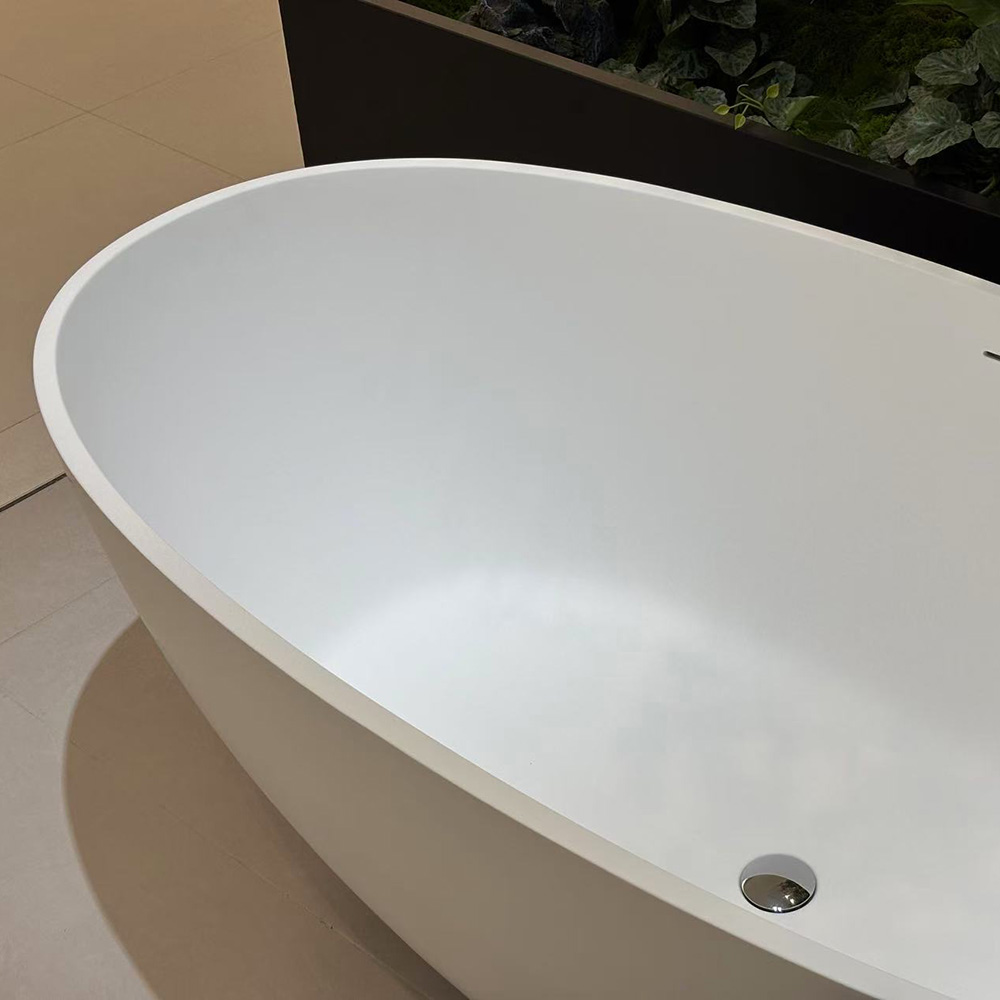
Quality control is more reliable when the approved sample, drawing, inspection points, and packaging method are agreed before production.
Casting and Surface Checks
The tub should sit steadily and remain free from visible cracks, voids, chips, distortion, and poorly blended repairs.
Inspectors should review color consistency, matte level, dimensions, drain fit, overflow position, and internal cleanliness. Water testing can identify leakage around the drain and overflow assembly.
For custom work, Gurgle can support changes to molds, dimensions, colors, and appearance. The approved drawing and physical sample should still control the order.
Packaging for Heavy Products
A heavy bath needs support beneath the base as well as protection around the visible surface. Dense cushioning, corner protection, a strong carton, and an appropriate wooden frame can reduce movement and impact.
Packaging should reflect the shipping method, unloading equipment, and destination conditions.
Applying the Criteria to an Oval Model
Gurgle’s Artificial Stone Bathtub uses a matte finish, an internal overflow connection, and a pop-up drain. These points should be reviewed with the hot-water system, floor condition, and plumbing plan.
The oval profile creates a softer central feature, while the seven available sizes provide different footprints for project planning. Lengths range from 1400 to 1800 mm, widths from 730 to 800 mm, and heights from 520 to 570 mm. Internal dimensions, entry height, and the selected model’s final weight still require review.
The product uses Grade A seven-layer carton packaging. Transport protection also includes high-density cushioning, a sturdy carton, and a wooden frame. The product page lists CE, cUPC, ISO 9001, and RoHS documentation as available upon request, together with a two-year warranty. Final color, certificate coverage, packaging details, and destination requirements should be confirmed for each order.
Projects requiring another shape or finish can compare the wider artificial stone bathtub collection, which includes oval, matte black, and other solid-stone designs.
Cleaning and Surface Care
Maintenance should be part of the buying decision because cleaning methods can preserve or damage the finish.
Routine Cleaning
Warm water, a soft cloth or sponge, and a mild soap-based cleaner are suitable for regular care. Residue should be rinsed away instead of being left to dry. Wiping the surface can reduce water marks, especially on dark matte finishes.
Managed properties should provide an approved product list for cleaning teams.
Products to Avoid
Metal brushes, rough scouring pads, aggressive abrasive powders, and unapproved acidic cleaners can dull or damage the finish. A product safe for ceramic or metal may not suit a resin-mineral surface.
Any new cleaner should be tested on a concealed area and used as instructed.
Repairing Marks and Damage
Light marks on some matte products may be treated through controlled sanding or refinishing. The abrasive grade and final treatment vary by product, so the supplier’s method should be followed.
Deep chips, cracks, and damaged textures require specialist assessment. Unapproved repair can enlarge the affected area or leave a permanent color difference.
Final Buying Checklist
Before ordering a stone bathtub, confirm material composition, finish, external and internal dimensions, net weight, water capacity, and installation conditions.
For project and distribution orders, also confirm sample approval, color control, inspection criteria, lead time, warranty, certification needs, and customization limits.
A suitable bath begins with accurate project information. Share the room dimensions, preferred size, finish, drainage position, order quantity, destination market, and packaging requirements to discuss the project with Gurgle. The team can help match an existing model or assess a custom solution.
FAQ
Q: Is artificial stone always better than acrylic?
A: No material is best for every project. Artificial stone provides a denser feel, strong visual presence, and varied finish options. Acrylic is lighter, generally easier to move, and often more economical. The choice depends on design priorities, structural limits, access, budget, and order volume.
Q: Does a heavy freestanding tub always need floor reinforcement?
A: Not always. The combined load of the bath, water, user, and accessories must be compared with the actual floor structure. Concrete and timber floors may require different reviews. A qualified local professional should make the final decision.
Q: Can matte artificial stone surfaces be repaired?
A: Minor marks may be repairable on some matte finishes, but the method depends on color, texture, and construction. Buyers should obtain approved cleaning and repair instructions before delivery. Deep damage or decorative textures may need specialist repair.


